

 Mike Bednar/photos as noted
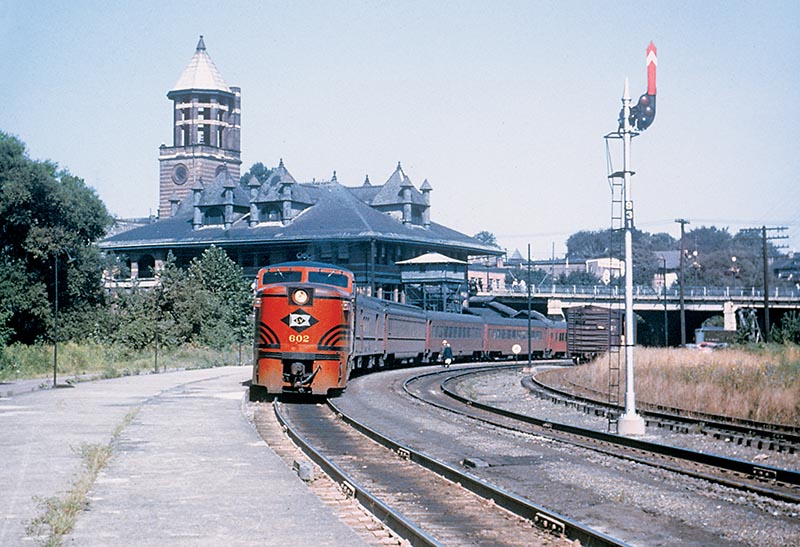
As you all know, I grew up in Hokendauqua, which is situated approximately five miles north of Pennsylvania’s fourth largest city — Allentown. During the late ‘50s and early ‘60s, Allentown thrived with numerous manufacturing industries and garment industry jobs. In addition to these, there were at least three meat packing factories (Arbogast & Bastian “A&B” Meats, Swift and Fedor & Sons). These were all served by the Lehigh Valley Railroad. The Lehigh Valley also provided less-than-carload service from their freight house at Race and Linden Streets. By 1960, they had implemented piggyback service at the freight yard using a circus ramp where trucks drove the trailers onto the flatcars. Despite surviving into the Conrail era, they never installed an overhead crane here and continued to use it until opening the Allentown Intermodal Service facility on Riverside Drive in 1986. Reading also had a small ramp that they served at East Penn Junction. Our grandmother and aunt, along with my two cousins, lived near the LV freight yard and the drill engines could be heard working there during the mornings and afternoons.
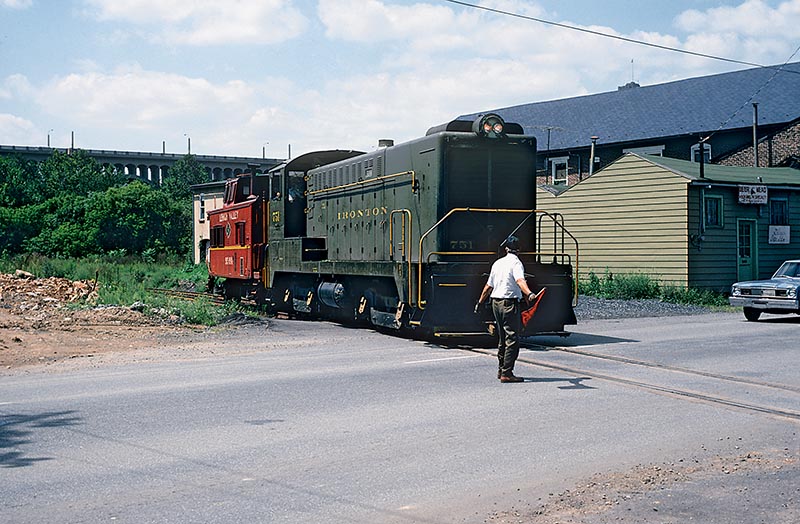
When Conrail took over on April 1, 1976, operations in Allentown basically remained unchanged… FOR A WHILE! On August 16, 1976, Ken Bealer was working the 1st trick Van Job. While on his travels, he noticed the East Penn Drill on the Barber Quarry Branch. Here’s the drill with the flagman stopping traffic on Lehigh Street for Ironton Baldwin #751 and LV caboose #95094 running light on their way back to the Allentown freight yard. The 8th Street Bridge is prominent in this view. — Photo by Ken Bealer, from the collection of Mike Bednar.
The LV’s 1st trick Allentown Drill served customers like A&B, Swift and Lehigh Structural Steel in the morning, then would shift the freight yard, including the piggybacks, and go on to do the work on the West End Branch, serving quite a few customers there before returning to East Penn yard in the afternoon. The 2nd trick would start out with shifting A&B, Lehigh Structural Steel, Huss Salt, Sussman’s Scrap Yard and Neuweiler Brewery on the old main line, then serve the customers on the Barber Quarry Branch, such as Traylor Engineering, Linde Air Products, Hawk Flour Mill, Robert Reichard Fertilizers and Wentz Memorials, who were all were served Monday through Friday. For a detailed map of this area, please see my “The Allentown Triangle” article in the 4th Quarter 2024 issue of TRP Magazine. After working the Barber Branch, the drill would switch the freight yard and piggyback ramp, making sure the Buffalo Nickel Plate (later Norfolk & Western) cars made the pick-up time of 10:30 p.m. for FFW-1. The song lyrics are in my head. “We’re living here in Allentown and they’re closing all the factories down.” How true those lyrics were by the time Billy Joel wrote them circa 1982. By then, only the piggyback business and a few of the old main line customers remained. The rest had disappeared. One bright spot was the newsprint delivered to the Morning Call newspaper in boxcars.
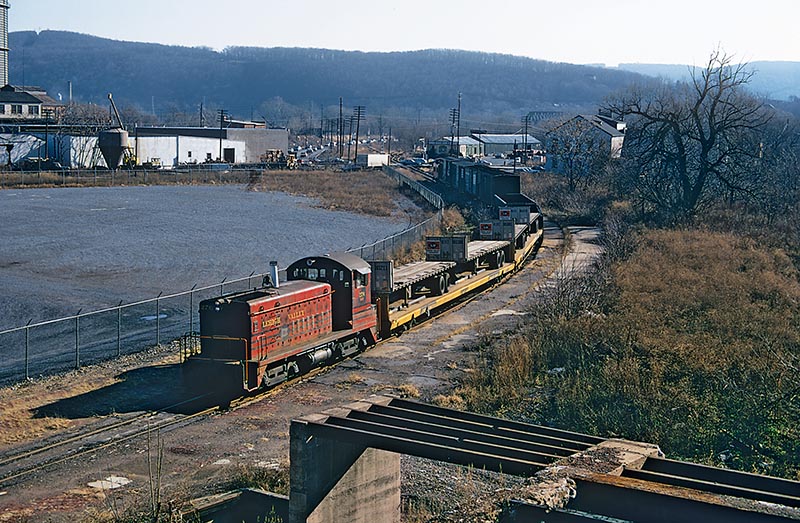
The LV took over the CNJ operation in Allentown on April 1, 1972. With that takeover, all locals were based out of the “BIG” yard at Allentown. The Allentown Drills became East Penn Locals and the piggyback business at LV’s Linden Street circus ramp was booming. Two area customers who took advantage of LV’s intermodal capabilities were ALPO (Allentown Pet Foods) and the Lehigh Valley Dairy. The East Penn local, powered by SW8 #276, brings a string of Lehigh Valley piggyback flatbed trailers past the remains of the Allentown passenger station at Hamilton Street on December 28, 1973. The TOFC business remained as a bright spot for the LV in the Allentown area. These RLVZ flatbeds were used almost exclusively for coiled steel loaded at Bethlehem. The empty trailers would be taken over to the Allentown Freight Yard, as seen here, and trucks would pick them up at the ramp and take them over to Bethlehem Steel. The truckers would then bring the heavy trailers back to the ramp to be reloaded onto flatcars. Incidentally, the 276 remains in local service as Reading & Northern #801 (some 74 years after being built). — Photo by Mike Bednar.
The mayor of Allentown may not have liked the song, but the truth was there. The Northeast was losing its manufacturing base. Even the mighty Bethlehem Steel shut down by 1995, keeping the coke ovens in operation for a few more years. On the Reading side, the “Industrial Drill” was kept busy serving what was left of East Penn Junction Yard after the consolidation of the Reading, Jersey Central and Lehigh Valley interchanges that took place on November 1, 1965. After that date, all interchange duties were performed in the CNJ’s Allentown Hump Yard. The LV and Reading yards were reduced to local service only. Even the classification work from Packerton was relocated to Allentown in 1973. The Reading crews served Traylor Engineering on the “Mack” Branch and customers between East Penn Junction and Emmaus Junction on the East Penn Branch, including Mack Trucks…